
The contractor’s depot: where the day starts.
A trade business runs out of somewhere, and for too many, that somewhere is a garage the family wants back, a storage unit that prohibits work, and a truck that carries the whole company. The depot fixes the day: load the night before, roll at 6:40, stop paying for lost time.
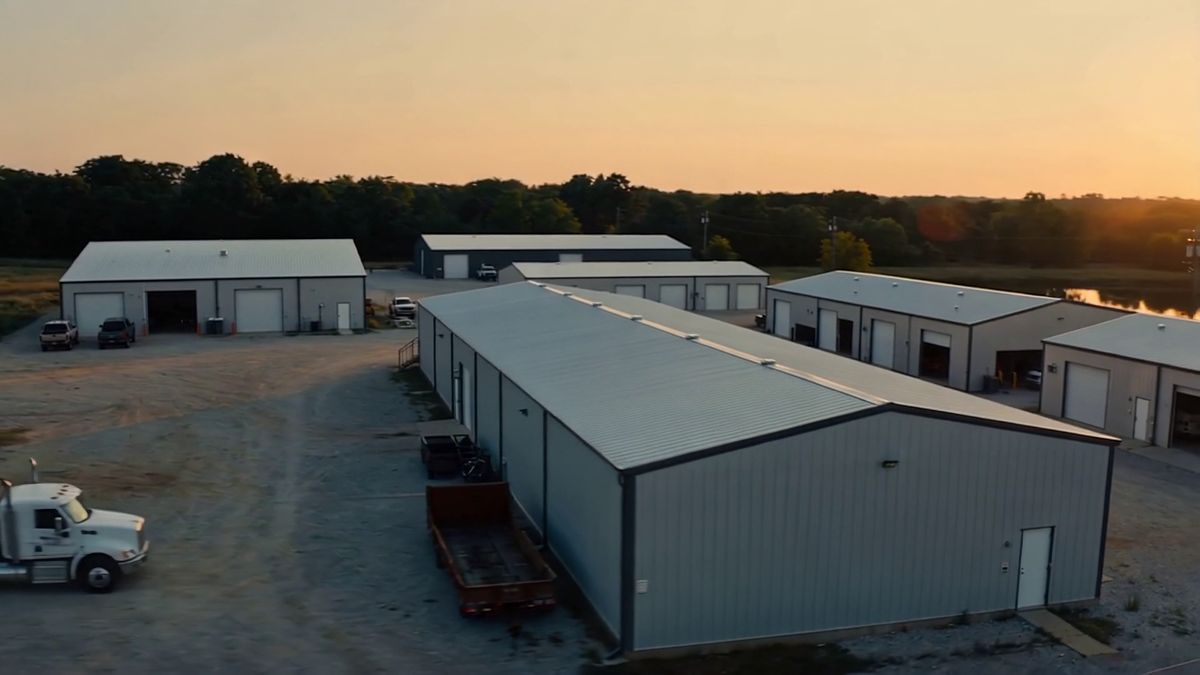
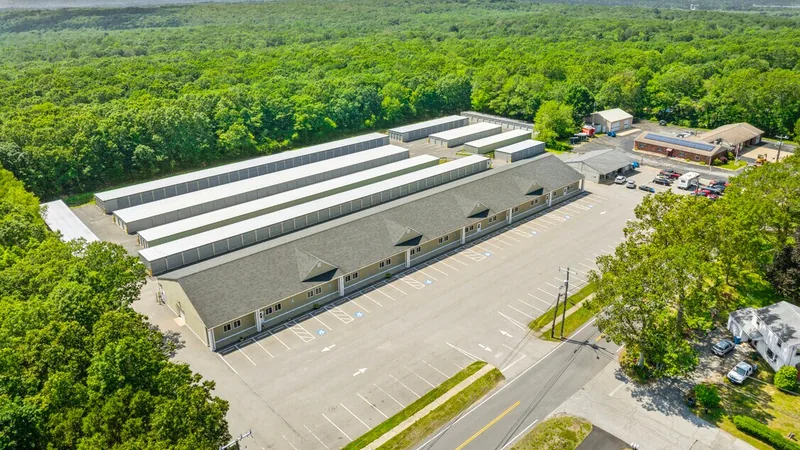
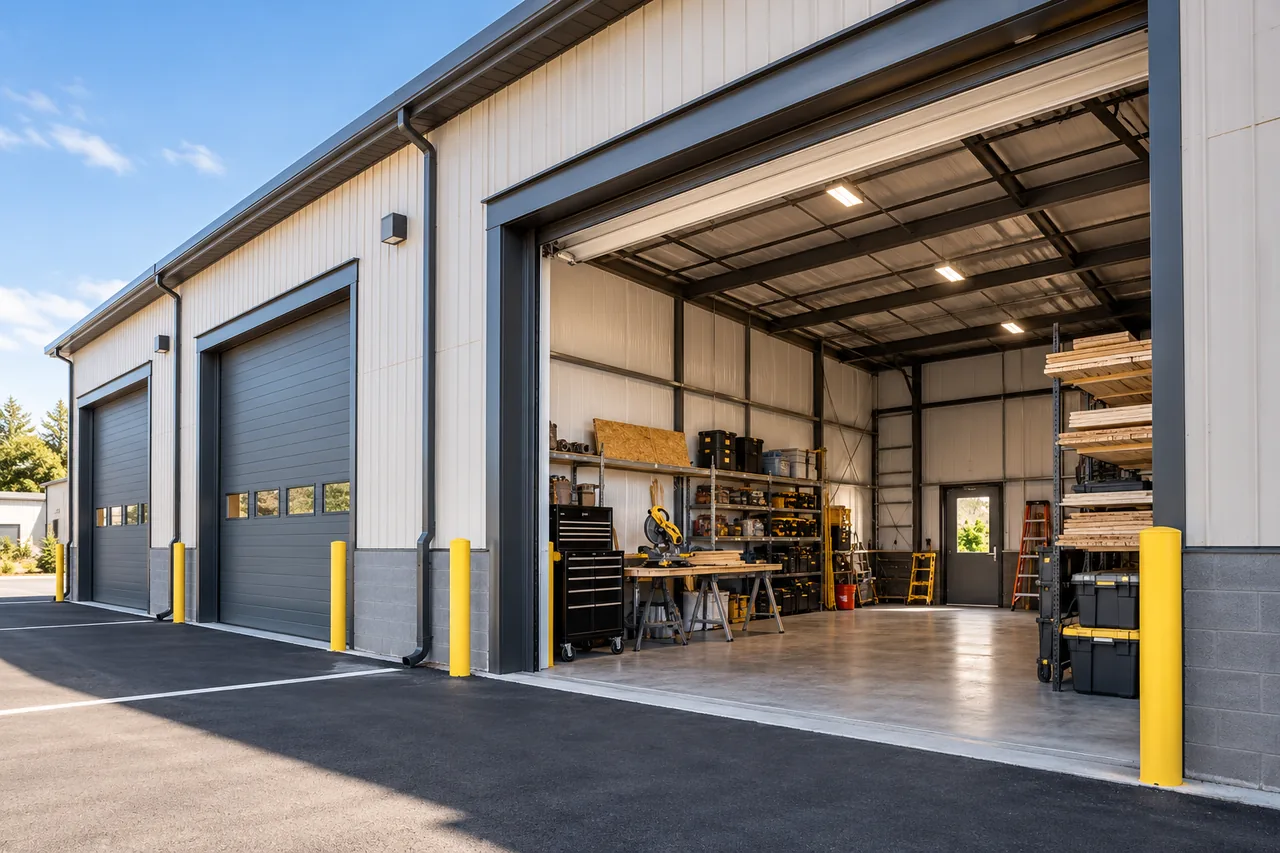 Illustrative trade depot bay
Built for your work.
Explore space by industry.
Built for the working day.
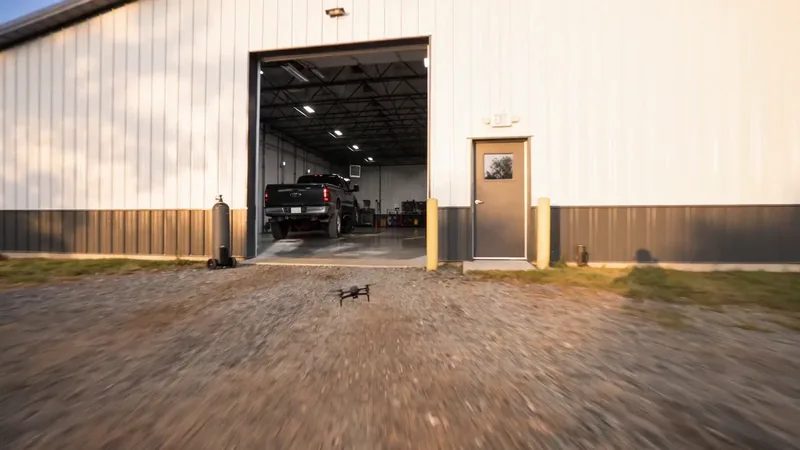 Electrical & HVAC
Wire, fittings, and units staged by job; benders and vacuum pumps on the bench; vans charged and loaded the night before. The morning convoy leaves on time.
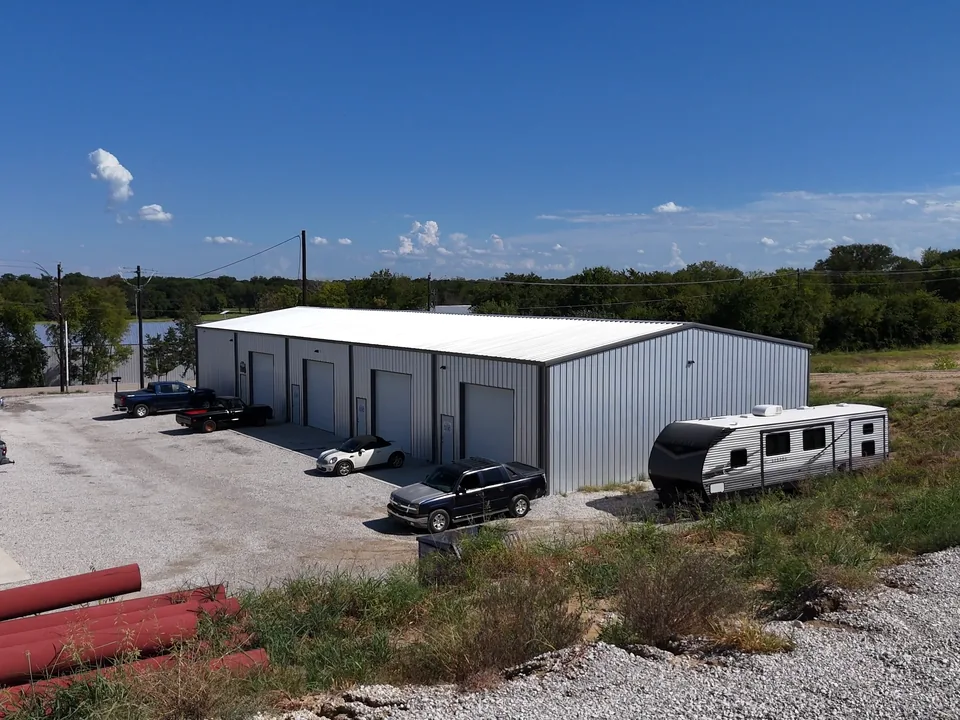 Plumbing & mechanical
Pipe racks along the wall, fittings binned, the water heater inventory that wins same-day jobs. Buy the pallet, not the piece.
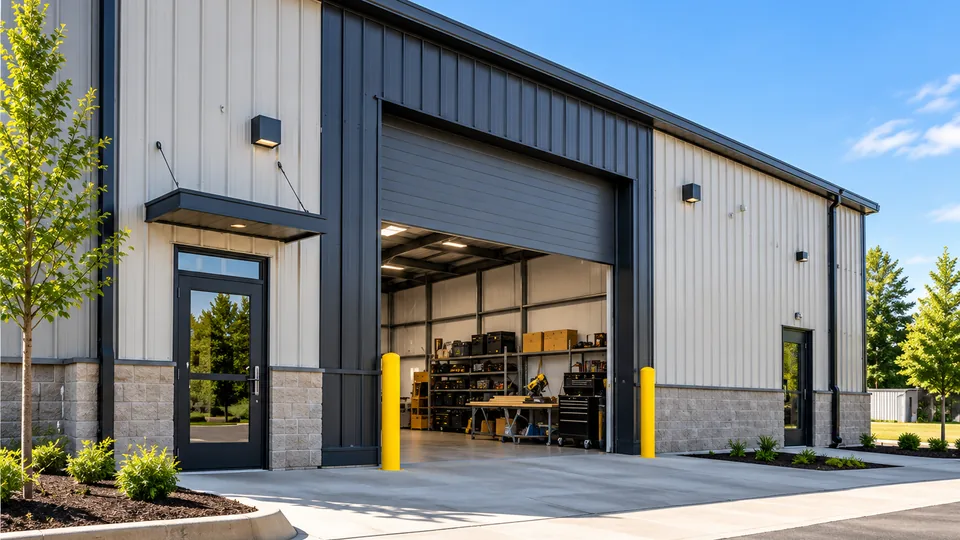 GC, painting & finish trades
Ladders, staging, sprayers, and the returns pile, out of the truck, off the driveway, behind a locked gate with cameras.
 Landscape & property services
Seasonal gear swaps (mowers out, plows in), parts bench, secure fuel-free storage, and yard options at select parks.
What a trade bay comes with.
| Spec | Typical | Why it matters |
|---|---|---|
| Size | 660 to 2,500 SF (combinable up) | One-crew start to three-crew depot without moving, sizing method here |
| Door | 10'×10' to 12'×14' grade | Back the van in, load in the dry, lock it inside overnight |
| Power | 100 to 200A | Battery walls, chop saws, compressors, block heaters |
| Racking | Clear height and racking layout confirmed with you | Material inventory goes vertical; buy at contractor pricing, store the savings |
| Security | Gate, code, cameras | Tool theft is a business-ending event; a locked bay beats a locked truck |
| Parking | Assigned; fleet-friendly | Trucks, trailers, and the crew’s cars, agreed in the lease, not fought in the lot |
What a depot costs.
Ask the Welcome Team for current availability and a written monthly quote. Confirm the lease structure, recurring charges, separate costs and scheduled increases before signing.
Compare against what it replaces: a large storage unit ($250 to 450, no work allowed) plus the leakage above. The depot usually pencils before the first bulk material buy.
Fit-out for most trades is Tier 0: move in, rack the walls, work.
Explore depot space.
The Welcome Team confirms each bay before you sign. Start with the size that holds your crew and your stock today; the growth path is next door.
The Welcome Team confirms access hours, door size and power for the specific bay in writing.
The garage is the most expensive free space you own.
Run one honest week: minutes lost hunting material across the garage, the storage unit, and two trucks; supply-house runs at retail because there’s nowhere to stock a bulk buy; jobs quoted slow because the gear for them is buried. Most contractors find $300 to 800 a month of leakage before counting the marriage-saving value of an empty garage.
A depot converts that leakage into rent and change: material bought at pallet pricing, staged by job the night before, crews rolling at 6:40 instead of 7:20. The first-response system answers the phone while you’re on the ladder; the address anchors the Google profile that makes the phone ring at all.
Start at 660 square feet if that’s the truth of your operation today, the growth path is next door, not across town.
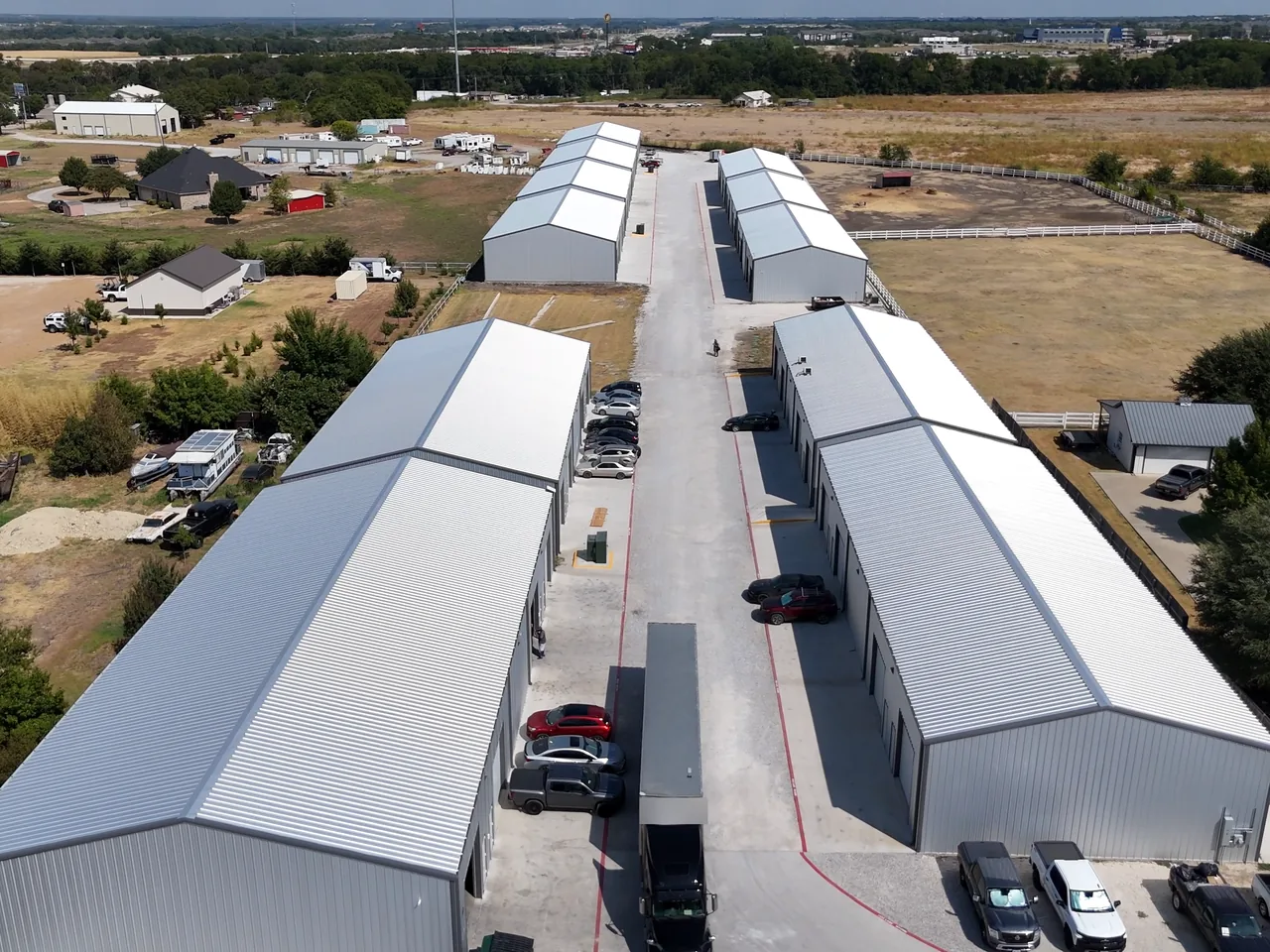 The morning rows
Do the homework. We already wrote it.
Contractor questions, answered straight.
Yes, per the parking plan in your lease, assigned spaces for trucks and trailers, yard options at select parks, and a no-derelict rule that keeps the whole lot professional. Bring your fleet count and we’ll map it before you sign.
Two licensed trades sharing a depot is common and workable, both on the lease, insurance for each. It’s the cheapest way for two one-truck operations to get real space, and we’ll paper it properly.
Typically general liability naming us as additional insured, the norm for any commercial lease, about a two-hour errand. The insurance stack guide decodes the whole thing including the certificate your agent generates same-day.
Office-front units exist at New Fairfield (finished suites), see flex + office. Plenty of contractors run the paperwork from a corner desk in a standard bay for years first.
Request a tour with the Welcome Team. They will confirm the available tour options, appointment and entry instructions before you visit.
Load the night before. Roll at 6:40.
Explore starter bays and larger depots. The Welcome Team confirms fleet parking, loading, access hours and pricing with you.